When Smart Routing Turns Counterproductive: Diagnosing the Logic Failures Inside Your CDN
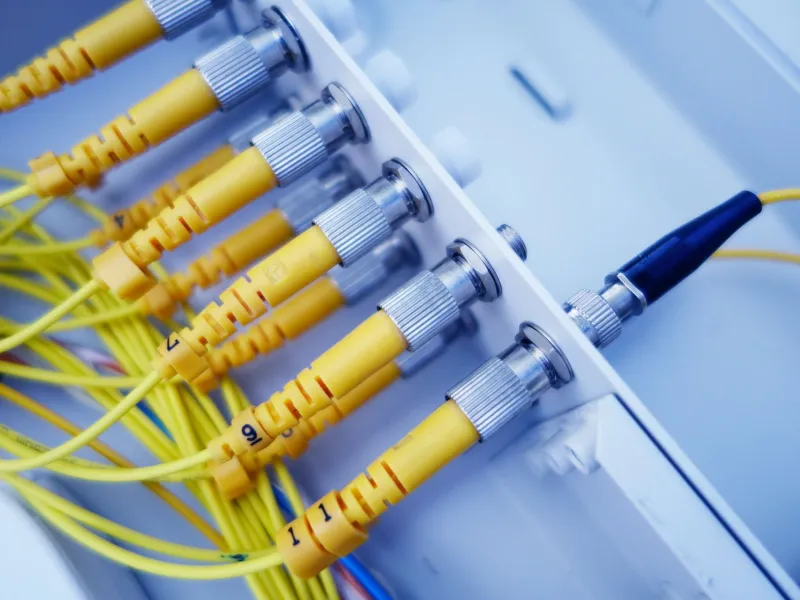
The promise embedded in modern content delivery is elegantly simple: put intelligent systems between your origin infrastructure and your users, and those systems will continuously find the most efficient path for every request. Algorithms will evaluate network conditions in real time, weigh latency against throughput, account for edge node load, and route each byte along an optimal trajectory. The result, in theory, is performance that no static configuration could replicate.
In practice, that intelligence is only as sound as the logic underlying it. And when that logic is poorly configured — or when it was configured correctly for conditions that no longer exist — the same routing engine designed to accelerate your content can quietly become the primary source of your performance problems.
How Routing Algorithms Are Supposed to Work
At its core, CDN routing logic exists to answer a single question: given this incoming request, which edge node should serve the response, and through what path should that response travel from the origin if the content is not already cached?
Sophisticated providers approach this question using a combination of real-time health checks, historical latency data, BGP routing information, and sometimes machine learning models trained on network behavior patterns. The goal is dynamic optimization — a continuous recalibration that accounts for the fact that network conditions at 2:00 p.m. on a Tuesday are meaningfully different from conditions during a major live event on a Sunday evening.
When this system functions as designed, publishers experience the seamless acceleration they were sold. When it malfunctions — or more commonly, when its configuration drifts out of alignment with actual infrastructure and traffic patterns — the consequences can be difficult to diagnose precisely because the system continues to appear functional at the surface level.
The Silent Inefficiency Problem
Routing failures that produce outright errors are straightforward to detect. The more insidious category of routing dysfunction is the kind that generates no errors at all — only suboptimal paths that quietly inflate latency, increase origin load, and erode cache efficiency without triggering any obvious alarm.
Consider a publisher that has expanded its origin infrastructure, adding a secondary origin cluster in a central US data center to complement its primary East Coast deployment. If the CDN's routing logic has not been updated to reflect this topology change, edge nodes in the central and western United States may continue routing cache-miss requests to the East Coast origin rather than the closer, lower-latency alternative. Every one of those requests carries an unnecessary latency penalty, and the secondary origin sits underutilized — a capital investment delivering a fraction of its intended value.
This specific failure mode is more common than many publishers realize. CDN configurations are frequently established during initial deployment and then treated as static infrastructure, even as the underlying origin architecture evolves.
Red Flags That Deserve Immediate Attention
Several observable patterns should prompt a thorough audit of origin-to-edge routing logic.
Asymmetric latency across geographically similar user segments. If users in Denver and Salt Lake City — comparable in distance from your nearest CDN PoPs — are experiencing materially different Time to First Byte measurements, routing logic is a prime suspect. Equivalent geography should produce roughly equivalent delivery performance absent a specific network anomaly.
Origin request rates that don't align with cache hit ratio expectations. If your CDN dashboard shows a healthy cache hit ratio but your origin servers are handling more requests than that ratio would imply, there may be a routing layer that is bypassing cache logic under conditions you have not explicitly configured for — certain request headers, cookie patterns, or query string variations that the routing algorithm is treating as cache-bypass signals.
Disproportionate time-to-connect versus time-to-first-byte ratios. When connection establishment consumes an unusually high share of total request time, it frequently indicates that traffic is being routed to edge nodes that are not optimally peered with the requesting user's ISP — a routing decision that prioritizes one optimization signal while ignoring a more relevant one.
Performance degradation that correlates with traffic volume increases. A well-tuned CDN should handle traffic spikes gracefully by distributing load across available edge capacity. If your latency metrics worsen predictably as request volume climbs, the routing algorithm may be concentrating traffic on a subset of nodes rather than distributing it efficiently — often the result of weighting parameters that made sense under lower-traffic conditions but have not been recalibrated for current scale.
Conducting a Meaningful Routing Audit
Addressing these issues begins with visibility. Publishers should establish baseline measurements for origin request latency, cache hit ratios, and Time to First Byte across a geographically representative sample of their user base — not just the major markets where performance is likely to be strongest.
From that baseline, the audit process involves systematically isolating variables. Trace the path of cache-miss requests from specific geographic origins to confirm they are reaching the expected edge node and then routing to the appropriate origin. Document the conditions under which your CDN configuration instructs the routing engine to bypass cache or escalate to origin, and verify that those conditions reflect current business logic rather than assumptions from a prior deployment phase.
Engage your CDN provider's technical team with specific, data-grounded questions about routing weight parameters and health check intervals. Providers with robust support capabilities should be able to walk through the decision logic applied to a given request type and explain why traffic is being routed as it is. Vague answers to specific questions are themselves diagnostic information.
Optimization Requires Ongoing Stewardship
The routing intelligence built into modern CDN platforms represents a genuine technical achievement. But intelligence without appropriate configuration is simply automated decision-making operating on flawed premises.
For digital publishers, the operational takeaway is that CDN configuration is not a deployment artifact — it is a living system that requires regular review as origin infrastructure evolves, audience geography shifts, and traffic patterns change. The publishers who extract the most value from their delivery infrastructure are not those who trust the algorithm most completely. They are the ones who understand it well enough to know when it needs correction.